PPM for Drinking Water in South Africa: What You Need to Know
Ensuring your drinking water is safe is a top priority for every South African household. One of the most important measurements in water quality is PPM, or parts per million.
But what does PPM mean for your tap water, how do you interpret the numbers, and what are the safe limits in South Africa? In this guide, I’ll walk you through everything you need to know, from understanding PPM to using calculators and interpreting your results with confidence.
Understanding PPM in Drinking Water
What Does PPM Mean?
PPM stands for “parts per million.” In the context of drinking water, it measures the concentration of a substance—like minerals, salts, or contaminants—dissolved in your water. For example, if your water has 100 ppm of total dissolved solids (TDS), it means there are 100 milligrams of dissolved substances in every liter of water.
Why Is PPM Important for Water Quality?
PPM is a quick and reliable way to gauge the purity and safety of your drinking water. High or low PPM readings can indicate issues such as:
- Excess minerals (hard water)
- Contaminants (like nitrates, lead, or chlorine)
- Water that tastes or smells odd
Knowing your water’s PPM helps you make informed decisions about filtration, treatment, and health.
Safe PPM Levels for Drinking Water in South Africa
South African Standards for Drinking Water
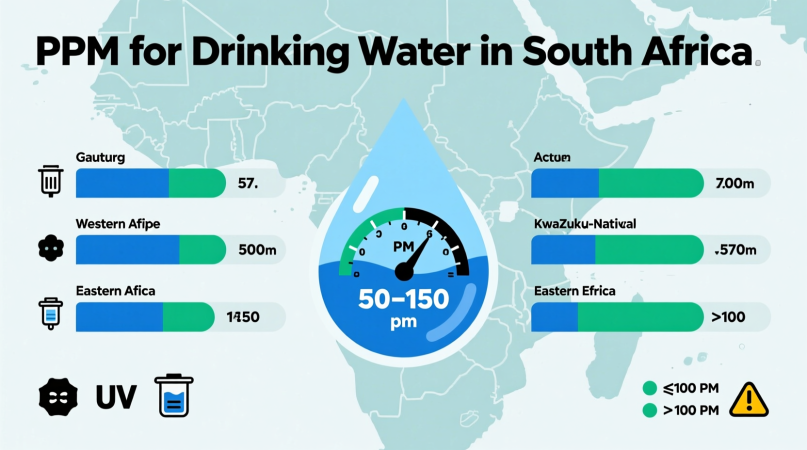
South Africa follows the SANS 241 standard for drinking water quality. This standard sets maximum allowable concentrations for various substances, often expressed in mg/L—which is equivalent to PPM for water. Here are some key guidelines:
Total Dissolved Solids (TDS)
- Ideal: Below 300 ppm (mg/L)
- Acceptable: Up to 1,200 ppm (mg/L)
- Above 1,200 ppm: Water may taste salty or bitter and could cause scaling in appliances
Nitrates
- Maximum: 11 ppm (mg/L) as nitrate-nitrogen (NO₃-N)
- High nitrate levels can be dangerous, especially for infants.
Chlorine
- Recommended: 0.2–0.5 ppm (mg/L) for effective disinfection
- Maximum: 5 ppm (mg/L)
- Too much chlorine can cause taste and odor issues.
Heavy Metals (Lead, Arsenic, etc.)
- Lead: Maximum 0.01 ppm (mg/L)
- Arsenic: Maximum 0.01 ppm (mg/L)
- Even small amounts can be harmful over time.
For a more detailed breakdown, see our Safe PPM Levels for Drinking Water guide.
How Does South Africa Compare Globally?
South Africa’s standards are similar to those set by the World Health Organization (WHO) and many developed countries. However, local water sources and infrastructure can affect actual water quality, so regular testing is important.
How to Test and Interpret PPM in Your Drinking Water
Testing Your Water: Simple Steps
- Get a PPM Meter or Test Kit:
Affordable digital TDS meters are widely available and easy to use. For specific contaminants, use targeted test strips or lab analysis. - Collect a Sample:
Use a clean container and follow the instructions for your test kit. - Read the Result:
Most meters display TDS in ppm. For other substances, compare your result to the color chart or digital readout. - Interpret the Numbers:
Use the guidelines above or our PPM for Water Testing article to understand what your results mean.
Using Online Calculators for Accurate Results
If you need to convert your readings or check specific substances, try these helpful tools:
- PPM to mg/L Calculator – Instantly convert between ppm and mg/L.
- Chlorine PPM Calculator – Calculate chlorine dosing for safe disinfection.
- PPM Solution Calculator – Mix or dilute solutions to the right concentration.
These calculators make it easy to double-check your math and ensure your water meets South African standards.
Common PPM Issues in South African Water
High TDS
- Causes: Mineral-rich groundwater, aging pipes, or water treatment chemicals.
- Effects: Salty taste, scaling in kettles and geysers, possible digestive discomfort.
- What to do: Consider a reverse osmosis filter if TDS is above 1,200 ppm.
High Nitrates
- Causes: Agricultural runoff, leaking septic tanks.
- Risks: Dangerous for infants (blue baby syndrome).
- What to do: Use a nitrate-specific filter and retest regularly.
Chlorine Taste or Smell
- Causes: Over-chlorination at the treatment plant.
- What to do: Let water stand uncovered for a few hours, or use a carbon filter.
For more on interpreting your results, see How to Read PPM Results.
Frequently Asked Questions
Is tap water in South Africa safe to drink?
In most urban areas, tap water is treated and generally safe. However, rural or informal settlements may have variable quality. Testing your water is the best way to be sure.
What should I do if my PPM is too high?
First, identify which substance is elevated (TDS, nitrates, metals, etc.). Then, choose the right filtration method and retest. Our PPM Calculation Mistakes post can help you avoid common errors.
Can I use the same PPM standards for borehole or rainwater?
Borehole and rainwater can have different mineral and contaminant profiles. Always test and compare your results to SANS 241 and WHO guidelines. For more, see PPM Standards for Drinking Water.
Tips for Accurate Water Testing
- Calibrate your meter regularly for reliable readings.
- Test at different times (morning, after rain) for a complete picture.
- Keep records of your results to spot trends or sudden changes.
For step-by-step instructions, visit How to Use a PPM Calculator for Accurate Measurement.
Conclusion
Understanding PPM in your drinking water is key to protecting your health and your family’s well-being. By knowing the safe limits, testing regularly, and using trusted calculators, you can confidently manage your water quality—whether you’re in Johannesburg, Cape Town, or a rural village. For more guides, calculators, and South Africa-specific advice, explore PPM for Drinking Water in South Africa and our full PPM Calculator suite.
Ready to check your water? Try our PPM to mg/L Calculator or read more about Safe PPM Levels for Drinking Water.

Dr. Robert is an industrial chemist specializing in process control, water purification, and quantitative chemical analysis. She has worked with environmental labs and manufacturing facilities to optimize solutions in parts-per-million (PPM) precision and safety compliance.
At PPMCalculator.com, Dr. Robert ensures the accuracy of each calculator and guide through peer review and data validation. Her mission is to make chemistry tools more reliable for engineers, researchers, and students worldwide.
Follow her professional updates on LinkedIn or contact via info@ppmcalculator.com. For More details, Click here